Mission Structure and Objectives
Quest Blasters: Action Strategy organizes play around discrete missions rather than a continuous campaign. Each mission drops you into a 3D environment with a clear goal: reach a target score, clear all cartoon characters in the area, or satisfy another specific condition. The brief shown before you start matters, because objectives shift from one mission to the next. You are not simply shooting at everything that moves; you are reading the goal and deciding how to meet it efficiently. Difficulty rises gradually, so early missions teach movement and aiming while later ones demand faster reactions and better route planning.
Controls and Combat Flow
On-screen controls handle both movement and aiming. You tap or swipe to move your character and line up your blaster on targets. The game reports progress in real time, showing remaining targets and your current score, which lets you adjust mid-mission instead of guessing how close you are to finishing. This feedback loop is central to the experience: you always know what is left, so you can decide whether to push forward or slow down and aim more carefully. The input scheme is simple enough for newcomers, yet precise enough that experienced players can improve their accuracy over time.
Visual Style and Accessibility
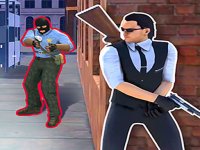
The cartoon art direction keeps the tone light. Bright colors and clean 3D models make targets easy to spot against the environment, which matters when you are scanning a level for remaining characters. There is no mature imagery or disturbing content, so the game suits family play. The same visual clarity supports gameplay: distinct shapes and colors help you read a scene quickly, plan a route, and avoid wasting time on empty corners. Accessibility here is not just about age rating; it is about how readable the screen is during fast action.
Balancing Action with Planning
What separates Quest Blasters from a pure reaction game is the planning layer. Because missions have specific goals and the layout stays consistent within a level, learning where targets appear lets you move with purpose rather than wandering. You can experiment with different routes and approaches to find what works for each challenge. Staying calm and focusing on the objective often beats rushing, especially as difficulty increases. The result is a game that rewards both quick hands and a clear head, which is why it appeals to players who want action without losing the strategic element.




Comments
0 comments