Anagram Clues Meets Crossword Grid
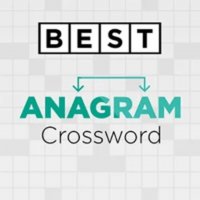
Letter Rearrangement Crossword replaces standard crossword definitions with scrambled letter sets. Every clue hands you jumbled letters, and your job is to rearrange them into the word that matches the crossword's definition and slots into the corresponding grid spaces. The result is a two-layer puzzle: solve the anagram, then confirm it fits the intersecting pattern. That combination rewards both vocabulary recall and spatial pattern recognition.
How a Solving Session Works
You start with a crossword grid and a list of clues. Selecting a clue, by click or tap, lets you type or choose letters to build your answer. Correct words fill the grid and unlock intersecting entries; wrong attempts simply don't fit. A help system provides hints for difficult words, so a single stubborn anagram won't stall the whole puzzle. The game runs on both computer and mobile devices, with mouse input on desktop and touch on phones and tablets. Detailed controls are explained inside the game itself.
Difficulty Range and Audience
Puzzles vary in difficulty, which makes the game approachable for newcomers while still offering a challenge to experienced solvers. Beginners can lean on the hint system and shorter words; veterans can push for speed and solve without assistance. Because the core loop builds spelling, vocabulary, and anagram recognition, the game suits players who want a mental workout rather than a reflex-based challenge.
Practical Solving Habits
Scanning scrambled clues for common prefixes and suffixes is the fastest starting point. Breaking long letter sets into smaller groups makes rearrangement less overwhelming. Using hints sparingly, rather than as a crutch, keeps the learning effect intact. Consistent practice improves both solving speed and the ability to spot word patterns across different puzzle layouts.




Comments
0 comments